Online Courses for Kids

Course Catalog

Explore All Courses

Find the perfect online class for your child's age and interests.

Showing 1–12 of 26

LEGO + micro:bit Robotics
Live Class STEM Coding AI & Robotics Robotics

LEGO + micro:bit Robotics

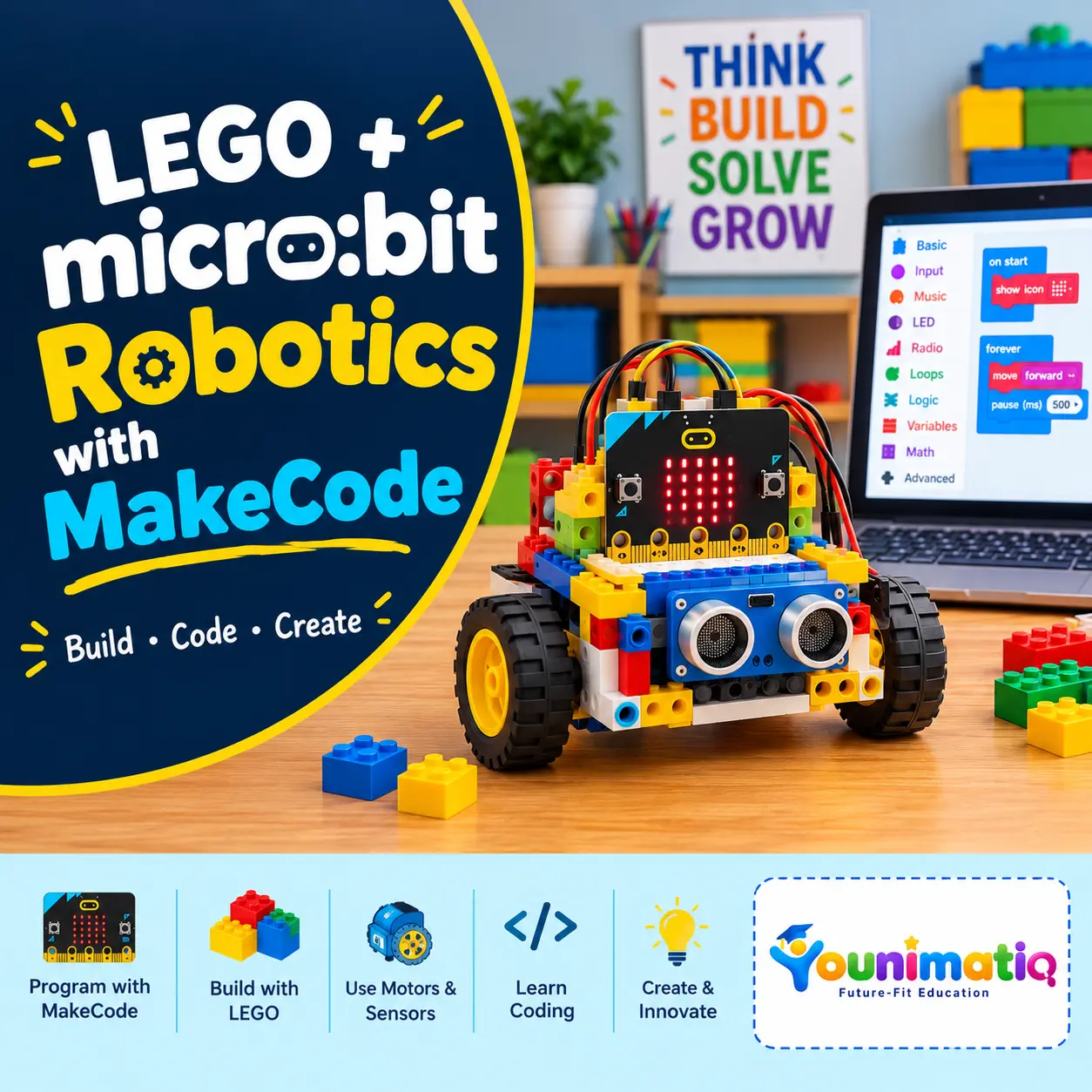
LEGO + micro:bit Robotics with MakeCode is an 8-class beginner robotics program where students learn coding, engineering, and robotics by building interactive LEGO creations controlled by the micro:bit. Students progress from simple MakeCode programs and LEGO projects to motors, sensors, autonomous robots, and real-world robotics challenges—developing problem-solving, logical thinking, coding, and engineering skills along the way.Class 1: Meet micro:bit & MakeCode – Interactive LEGO Name BadgeExplore the micro:bit and MakeCode by creating an interactive LEGO name badge using buttons, LEDs, and animations.Class 2: Inputs, Outputs & Logic – LEGO Reaction GameLearn how inputs, outputs, events, and simple conditions work by building and coding a LEGO reaction game.Class 3: Smart LEGO Traffic Light – Mini Smart City JunctionBuild a mini city junction and program a LEGO traffic light using events, timing, and multiple outputs.Class 4: Build Your First Robot – LEGO micro:bit Robot CarBuild your first micro:bit-powered LEGO robot and program it to move forward, backward, and respond to commands.Class 5: Robot Navigation – LEGO Maze ChallengeUse motors, turns, loops, and step-by-step algorithms to program a robot through a LEGO maze.Class 6: Smart Sensor Robot – Obstacle-Avoiding RobotAdd sensors and IF/ELSE logic to create a robot that can detect obstacles and make autonomous decisions.Class 7: Robotics Mission – LEGO Delivery RobotCombine motors, sensors, loops, and problem-solving to build a robot that completes a real-world-inspired delivery mission.Class 8: Young Roboticist Challenge – Build Your Own Smart RobotDesign, build, code, debug, and present an original smart robot that solves a robotics challenge.

Code, Create & Invent with Micro:bit
Live Class Coding AI & Robotics Game Design Robotics

Code, Create & Invent with Micro:bit

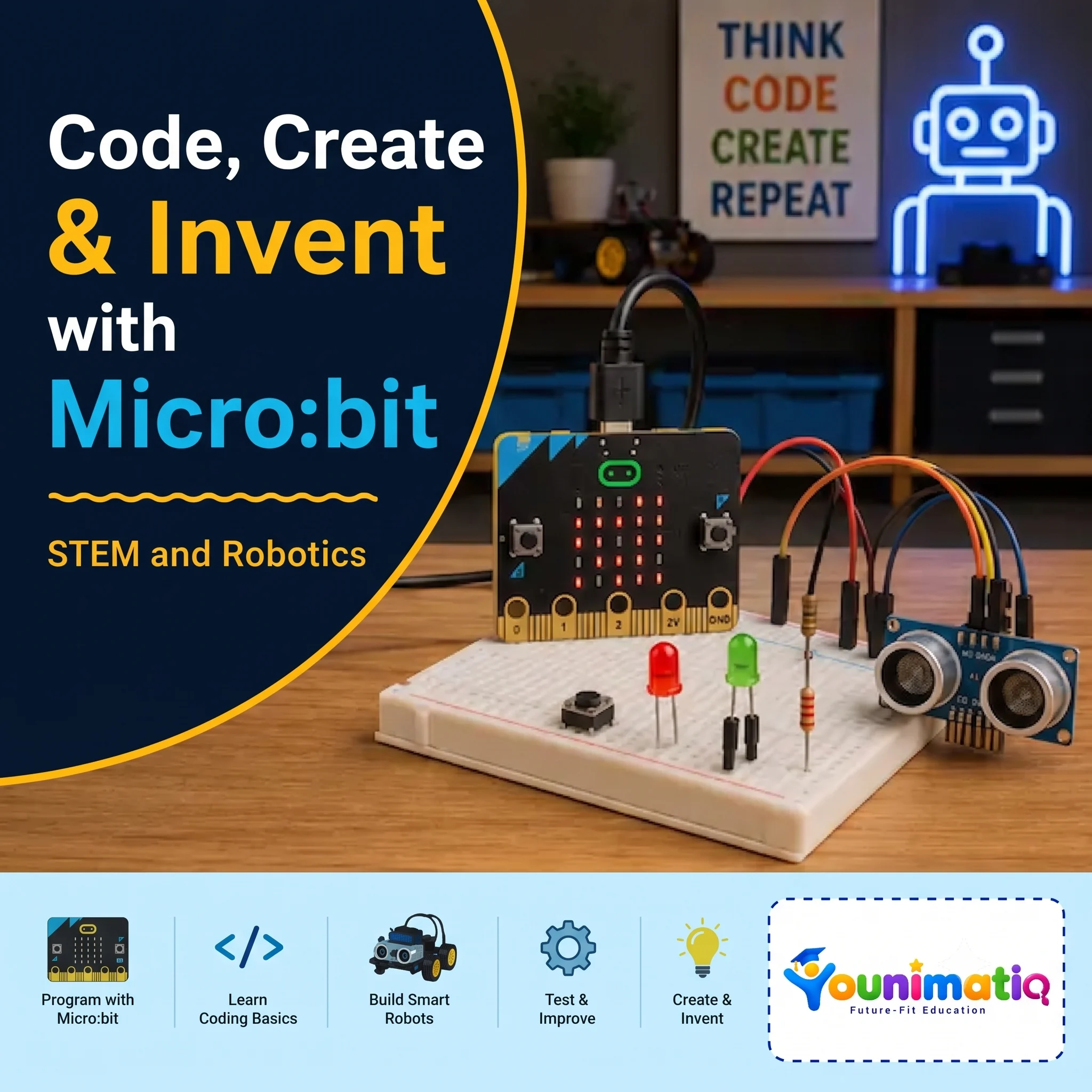
Micro:bit Coding & Innovation is a hands-on course where students learn coding, electronics, sensors, and game design through creative micro:bit projects. They progress from basic programming to building interactive games, sensor-based projects, wearable technology, data visualizations, and electronic creations.By the end of the course, students develop coding, problem-solving, computational thinking, and engineering skills while turning their ideas into working projects.Class 1: Ahoy! – Introduction to micro:bitDiscover the micro:bit's LEDs, buttons, battery, and sensors while creating your first interactive program.Class 2: Light the Way – LEDs & CoordinatesLearn how LED coordinates work and create custom images and patterns on the micro:bit display.Class 3: Wireless – Communicating with micro:bitExplore wireless communication by sending messages between the micro:bit and interactive characters on the Tynker Stage.Class 4: High Rollers – Variables & Random NumbersLearn how variables store information and use random numbers to build a digital dice roller.Class 5: π-rates – Number Guessing GameUse variables, expressions, loops, conditions, and random numbers to create an interactive number-guessing game.Class 6: Two Sides of a Coin – Booleans & GesturesExplore true/false logic and micro:bit gestures while creating a shake-powered coin toss simulator.Class 7: M-oceanography – Arrays & LoopsLearn to store and manipulate data in arrays while using loops to create an animated wave project.Class 8: Game Night – Sprites & RadioBuild a fast-paced micro:bit Racer game while learning about sprites, game events, variables, and radio communication.Class 9: Sensory Overload – SensorsExplore the micro:bit's accelerometer, temperature sensor, and compass while creating an interactive Tag game.Class 10: Pins – Digital & Analog ElectronicsDiscover how micro:bit pins work with digital and analog signals while controlling external LEDs using alligator clips.Class 11: Devices – Motors & SpeakersConnect motors and speakers to the micro:bit and combine coding, sound, and motion to create a spinning prize wheel.Class 12: FUNctions – Reusable CodeLearn how functions, parameters, and conditional logic make programs more organized while building a Rock, Paper, Scissors game.Class 13: Soarin' Dragon – Game DesignTurn the micro:bit into a game controller and build a complete dragon game with movement, obstacles, scoring, and Game Over logic.Class 14: Glow Shoes – Wearable TechnologyUse the accelerometer, variables, pins, and LEDs to create a wearable project that responds to movement.Class 15: Grapher – Sensor Data VisualizationCollect sensor data from the micro:bit and turn it into plotted points to explore coding, data collection, and graphing.Class 16: Piano – Build a Paper PianoCombine coding, electronics, and creativity to build a playable paper piano using aluminum foil, pins, and the micro:bit.
Minecraft AI Inventors
Live Class Coding AI AI Mastery Minecraft Reimagined Minecraft

Minecraft AI Inventors

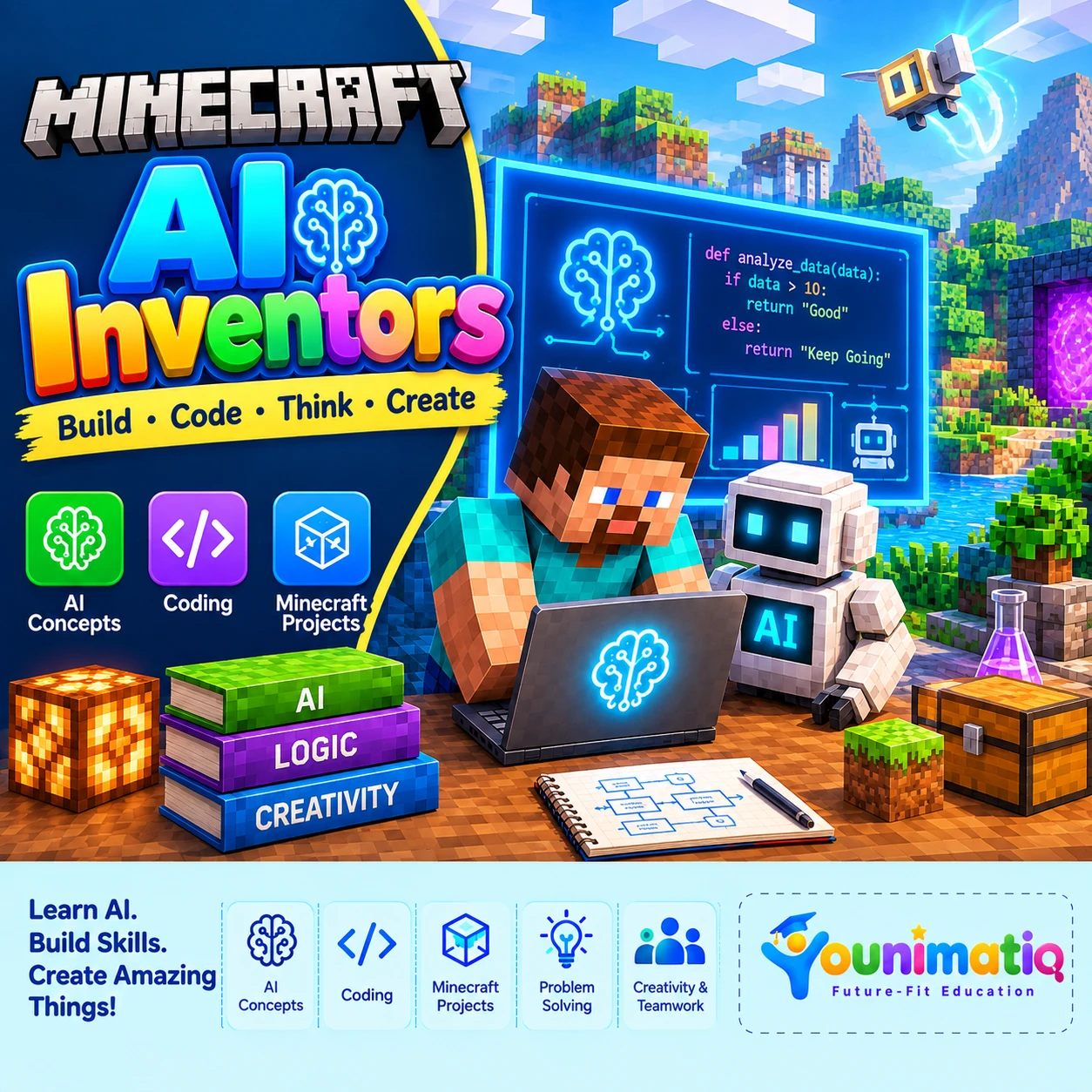
Minecraft AI Inventors is an engaging project-based course that introduces students to the exciting world of Artificial Intelligence through Minecraft Education. Students learn how AI systems recognize patterns, work with data, make decisions, and solve problems while building and coding inside Minecraft.The course begins with AI fundamentals and computational thinking, then gradually moves into Minecraft Agent programming, algorithms, conditions, loops, variables, functions, debugging, and automation. In the final stage, students become AI inventors by identifying a problem, designing an AI-inspired solution, building their Minecraft environment, programming an Agent, testing their solution, and presenting their final project.Through hands-on challenges, students develop AI literacy, coding skills, problem-solving, data thinking, creativity, computational thinking, and responsible AI awareness.Level 1: AI FoundationsClasses 1–8Students explore the basics of Artificial Intelligence through Minecraft by learning about patterns, data, classification, algorithms, and decision-making while completing hands-on Agent challenges.Level 2: AI + CodingClasses 9–16Students progress from AI concepts to coding, programming Minecraft Agents using commands, coordinates, conditions, loops, variables, functions, and debugging to create automated systems.Level 3: AI InventorsClasses 17–24Students apply their AI and coding skills to solve a problem of their choice by collecting data, designing an AI-inspired solution, building and programming an Agent, testing and improving their project, and presenting their final invention.

Robotics & Automation With Python
Live Class Coding AI & Robotics Robotics

Robotics & Automation With Python

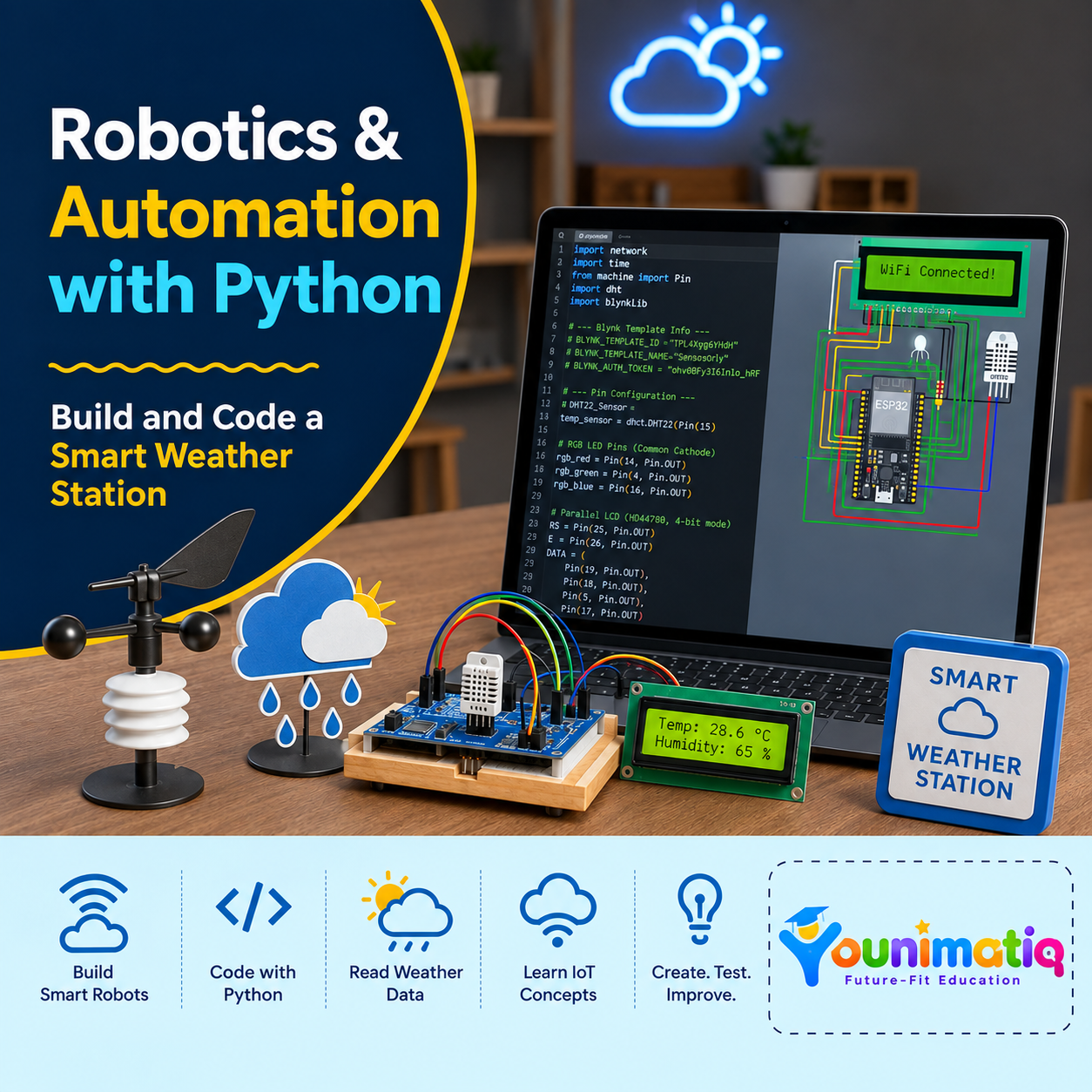
Robotics & Automation with Python introduces students to how Python can bring electronic projects to life using the Wokwi ESP32 simulator. This Robotics and Automation Course helps students start with simple LED and circuit controls and gradually build smart projects using sensors, motors, displays, and automated decision-making. Through projects such as a Smart Traffic Light, Hand Sanitizer Dispenser, Digital Weather Station, Security Alarm, and Smart Parking System, students learn to turn their ideas into working prototypes while developing coding, problem-solving, logical thinking, and engineering skills.Class 1: Smart Traffic Light Program multiple LEDs with Python to create an automated traffic-light sequence using GPIO, timing, and loops.Class 2: Light & Volume ControllerUse a potentiometer to adjust LED brightness and buzzer volume while learning how analog input controls output levels.Class 3: Smart Hand Sanitizer DispenserUse an ultrasonic sensor and servo motor to automatically dispense sanitizer when a hand is detected.Class 4: Motion-Sensing Smart RoomDetect movement with a PIR sensor and use Python logic to automatically control room lights and a smart door.Class 5: Digital Weather Station – Part 1Read temperature and humidity from a DHT22 sensor and process the sensor data using Python.Class 6: Digital Weather Station – Part 2Display temperature and humidity readings on an LCD using Python functions, conditions, and formatted output.Class 7: Smart Security AlarmBuild a motion-triggered security system using a PIR sensor, buzzer, and LEDs.Class 8: Automatic Night LightUse an LDR to detect light levels and automatically control an LED based on brightness.Class 9: Smart Parking SystemUse an ultrasonic sensor to detect vehicles and control a servo barrier with LED indicators.Class 10: Smart Home Control CenterCombine sensors, outputs, functions, and Python logic to create an integrated home automation system.Class 11: Gas Leak DetectorMonitor gas sensor readings and trigger LED and buzzer alerts when the gas level exceeds a set threshold.Class 12: Smart Robotics ChallengeCombine sensors, actuators, conditions, loops, and functions to design and simulate an original smart automation system in Wokwi.

Computer & Digital Literacy Course - Level 1
Live Class Academics Computer Science

Computer & Digital Literacy Course - Level 1

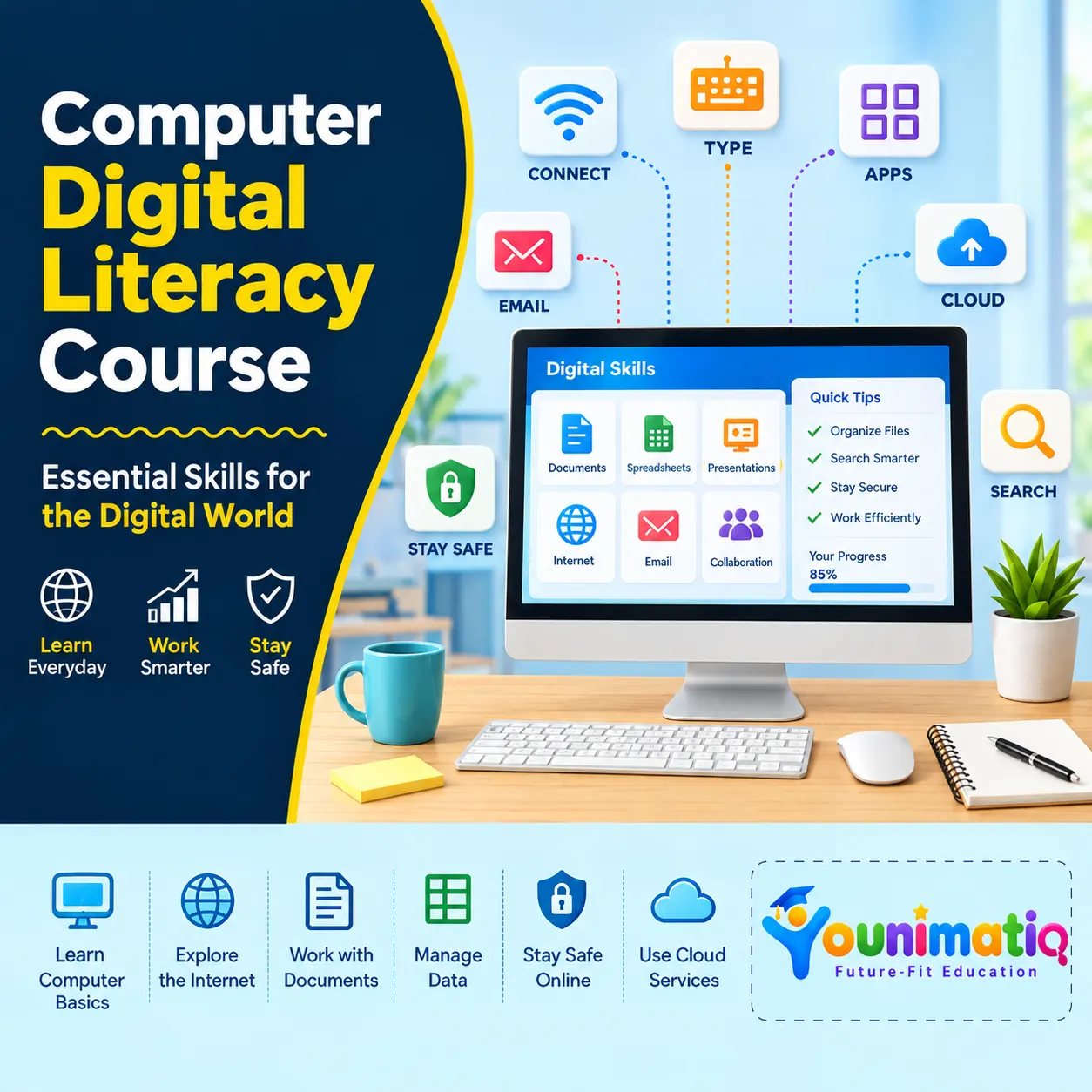
Computer Literacy Course – Level 1 helps students build a strong foundation in how computers work, how information is stored and processed, and how to manage digital files effectively. This computer literacy course also teaches students how to search for reliable information, stay safe online, protect their personal information, and understand their digital footprint. The level begins with an engaging binary and logic challenge and gradually develops practical computer and digital citizenship skills through hands-on activities and a final Digital Citizenship Audit. Level 1: Computer Systems & Digital CitizenshipTrial Class: Crack the CodeDecode binary messages, create a binary name badge, design a yes/no algorithm with a flowchart, and turn it into a working Python program using if, else, and print().Class 1: How a Computer Processes a TaskLearn how computers process information through the Input–Process–Output–Storage cycle and practice troubleshooting common problems.Class 2: File Systems, Cloud Storage & Version ControlLearn to organize files using naming conventions while understanding the difference between local storage, cloud synchronization, and version control.Class 3: Advanced Keyboarding & Workflow EfficiencyImprove typing speed and accuracy while learning keyboard shortcuts and window-management techniques for faster computer workflows.Class 4: Advanced Search & Source EvaluationLearn to use Boolean search operators and evaluate online sources for credibility, bias, and currency.Class 5: Cybersecurity FundamentalsLearn how to recognize phishing attempts and create a personal password-safety plan using strong passwords, 2FA, and password-management strategies.Class 6: Digital Footprint + Unit Wrap-UpExplore how online activity can affect digital reputation and demonstrate learning through a Digital Citizenship Audit and quiz.

Scratch AI: Imagine, Code & Create
Live Class AI

Scratch AI: Imagine, Code & Create

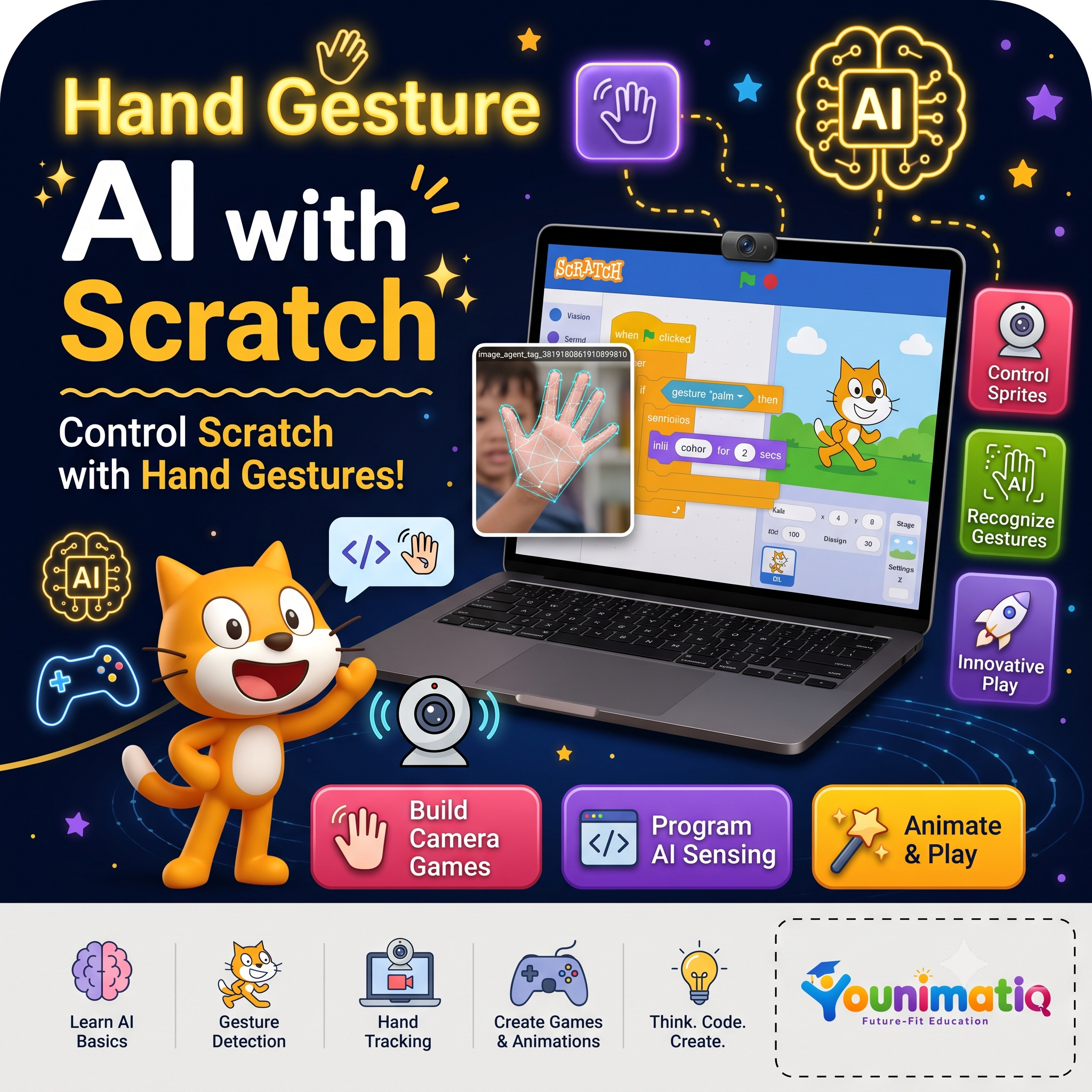
AI & Scratch Fun Camp: Imagine, Code & Create introduces young learners to the fascinating world of artificial intelligence through playful, hands-on projects using Scratch and beginner-friendly AI tools. Children discover how computers learn, recognize images, respond to sounds, understand simple conversations, and make decisions while creating games, chatbots, and interactive experiences. Each session combines creativity, coding, and exploration, helping students develop problem-solving skills and confidence as young technology creators.Class 1: What Is AI? Humans vs ComputersDiscover what artificial intelligence is by comparing how humans think and how computers follow instructions to create a responsive Scratch character.Class 2: Rules vs Smart BehaviourBuild a Smart Pet that reacts to different actions and explore how computers use rules to appear intelligent.Class 3: Can Computers Listen?Create a clap-controlled or voice-reactive game and learn how computers can use sound as data.Class 4: Teaching a Computer with PicturesTrain your first AI model to recognize animals or objects using pictures and explore how machines learn from examples.Class 5: When AI Makes MistakesTest and challenge AI models to understand why computers sometimes make incorrect predictions.Class 6: Body as an Input: Pose AIUse body movements to control a Scratch game by training an AI to recognize different poses.Class 7: Talking with a ComputerBuild a friendly chatbot that can greet users and respond to simple questions and phrases.Class 8: How AI Makes DecisionsDesign a Smart Traffic Light or decision-based game that demonstrates how AI uses information to make choices.

Minecraft Python Quest: Build, Code & Explore
Live Class Coding Minecraft

Minecraft Python Quest: Build, Code & Explore

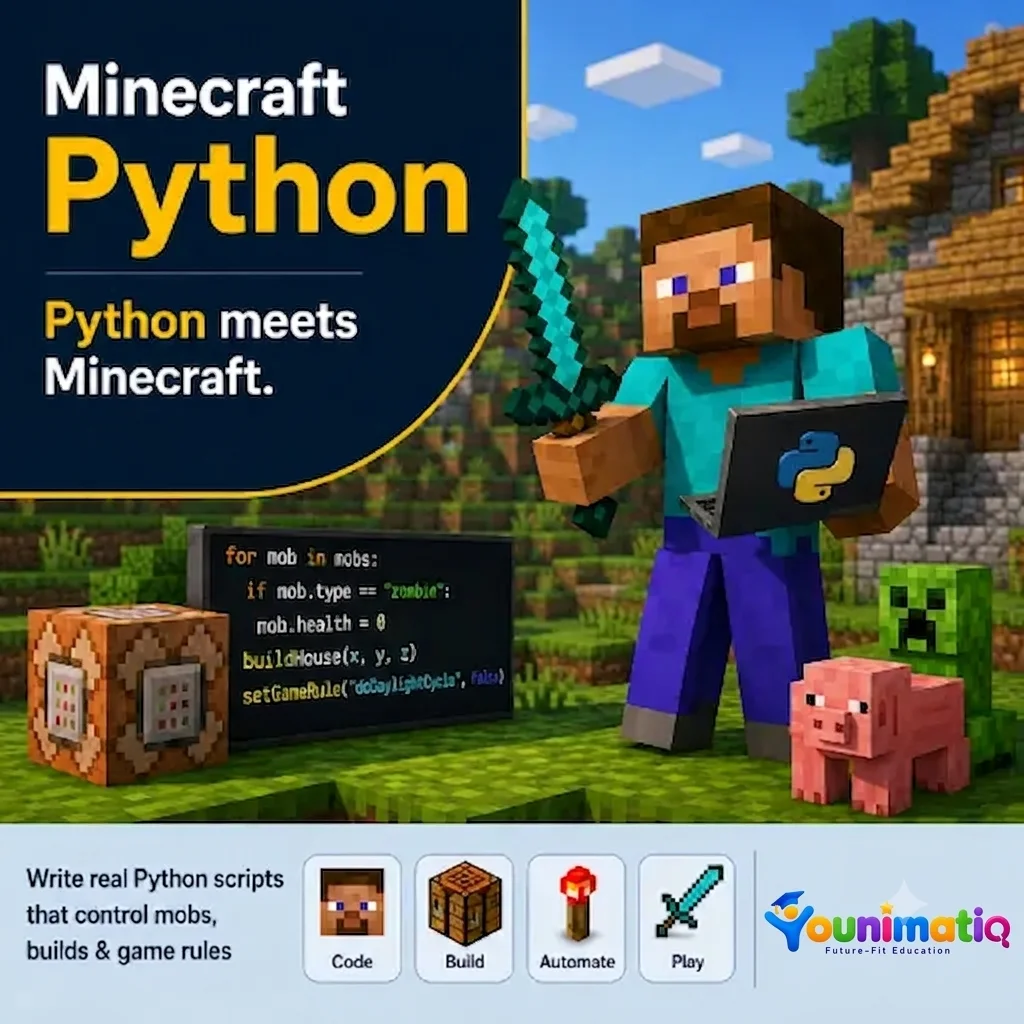
Minecraft Python Course introduces students to the world of real programming through exciting Minecraft python for kids challenges and creative projects. Over eight engaging classes, students use Python to command the Agent, automate builds, and create interactive worlds while learning key concepts such as sequencing, loops, coordinates, variables, and functions. Each session combines coding with hands-on exploration, helping learners build confidence, logical thinking, and problem-solving skills in a fun and meaningful way.Trial Class: Robot Builder Rescue MissionMeet the Minecraft Agent and learn how step-by-step Python commands can control a robot helper.Class 1: Magic Roads & Mystery GardensUse loops and coordinates to automate building and create colorful repeating patterns.Class 2: Architect Academy: Dream Mansion ChallengeCombine multiple Python commands to design and build a spectacular dream mansion.Class 3: Ocean Explorer: Aquarium AdventureCode an underwater aquarium by constructing tanks, filling them with water, and adding sea creatures.Class 4: Rainbow Kingdom & Beacon of LightApply loops and color patterns to create giant rainbows and dazzling beacon towers.Class 5: Farmer Tycoon: Mega Farm BuilderAutomate farming tasks by coding large-scale crop fields and organized farm layouts.Class 6: Thrill Ride EngineersUse Python to design and build an exciting roller coaster filled with twists, turns, and ramps.Class 7: Volcano Lab: The Great EruptionBring together your coding skills to create an erupting volcano with dynamic effects and simulations.Class 8: Design Your Own GameDesign your own game and publish

Book a Free Class

Tell us a bit about your child to book a free demo class for the selected course.

how_to_reg All tutors are background-checked