About this Course
Micro:bit Coding & Innovation is a hands-on course where students learn coding, electronics, sensors, and game design through creative micro:bit projects. They progress from basic programming to building interactive games, sensor-based projects, wearable technology, data visualizations, and electronic creations.
By the end of the course, students develop coding, problem-solving, computational thinking, and engineering skills while turning their ideas into working projects.
Class 1: Ahoy! – Introduction to micro:bit
Discover the micro:bit's LEDs, buttons, battery, and sensors while creating your first interactive program.
Class 2: Light the Way – LEDs & Coordinates
Learn how LED coordinates work and create custom images and patterns on the micro:bit display.
Class 3: Wireless – Communicating with micro:bit
Explore wireless communication by sending messages between the micro:bit and interactive characters on the Tynker Stage.
Class 4: High Rollers – Variables & Random Numbers
Learn how variables store information and use random numbers to build a digital dice roller.
Class 5: π-rates – Number Guessing Game
Use variables, expressions, loops, conditions, and random numbers to create an interactive number-guessing game.
Class 6: Two Sides of a Coin – Booleans & Gestures
Explore true/false logic and micro:bit gestures while creating a shake-powered coin toss simulator.
Class 7: M-oceanography – Arrays & Loops
Learn to store and manipulate data in arrays while using loops to create an animated wave project.
Class 8: Game Night – Sprites & Radio
Build a fast-paced micro:bit Racer game while learning about sprites, game events, variables, and radio communication.
Class 9: Sensory Overload – Sensors
Explore the micro:bit's accelerometer, temperature sensor, and compass while creating an interactive Tag game.
Class 10: Pins – Digital & Analog Electronics
Discover how micro:bit pins work with digital and analog signals while controlling external LEDs using alligator clips.
Class 11: Devices – Motors & Speakers
Connect motors and speakers to the micro:bit and combine coding, sound, and motion to create a spinning prize wheel.
Class 12: FUNctions – Reusable Code
Learn how functions, parameters, and conditional logic make programs more organized while building a Rock, Paper, Scissors game.
Class 13: Soarin' Dragon – Game Design
Turn the micro:bit into a game controller and build a complete dragon game with movement, obstacles, scoring, and Game Over logic.
Class 14: Glow Shoes – Wearable Technology
Use the accelerometer, variables, pins, and LEDs to create a wearable project that responds to movement.
Class 15: Grapher – Sensor Data Visualization
Collect sensor data from the micro:bit and turn it into plotted points to explore coding, data collection, and graphing.
Class 16: Piano – Build a Paper Piano
Combine coding, electronics, and creativity to build a playable paper piano using aluminum foil, pins, and the micro:bit.
Who this course is for
- child_care Kids and teens ready for guided live learning who enjoy creative, hands-on projects.
- psychology Beginners and intermediate students interested in Coding — no prior expert knowledge required.
- diversity_3 Parents looking for structured, live online classes with clear progress and a final showcase.
What you’ll need
- laptop_mac A laptop or desktop with a stable internet connection
- headphones Headphones or a quiet space for live sessions
- mic Working microphone and camera for interaction
- schedule Consistent attendance for the live class schedule
Course Curriculum
Curriculum details are being updated.
Our Guarantee
Expert designed Curriculum
Designed by MIT, Harvard Experts keeping kids in mind
2
100% Satisfaction Guarantee
expand_more
100% Satisfaction Guarantee
Expert teachers
World class, background checked, certified and highly trained teachers with 5+ years of experience in their fields.
Downloadable certificate
Show the world you did it !! You really did it!!
Certificate of Completion
Students who complete the modules and final project receive a Younimatiq certificate they can share with family, teachers, and future programs — a real milestone for their learning journey.
Frequently Asked Questions
Common questions about live classes and enrollment.
Most students attend 1-2 sessions per week, 45–55 minutes each. Schedules flex around school, sports, and family commitments.
Related Courses
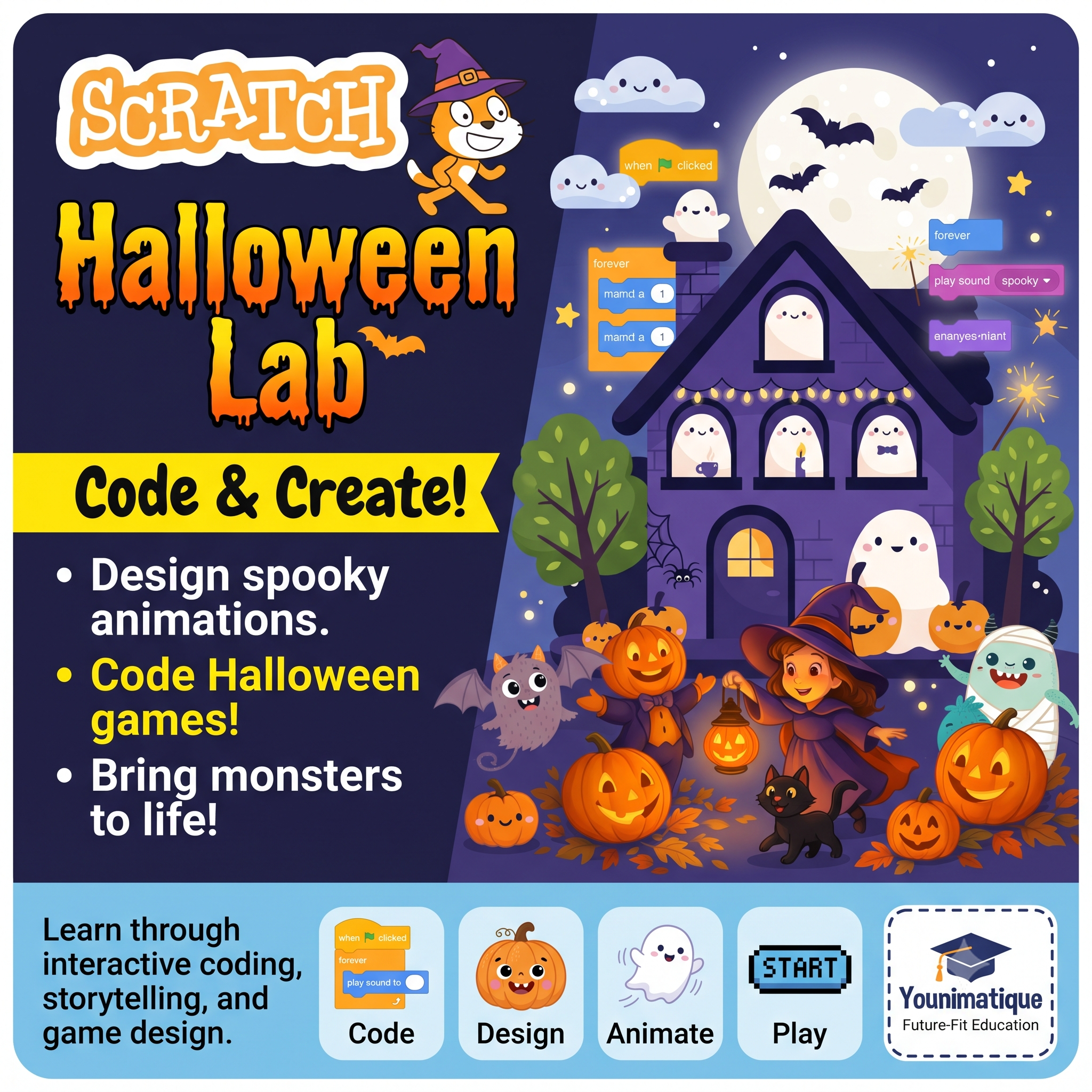
Scratch Halloween StoryLab: Spooky Stories, Animation & Coding
A Halloween-themed storytelling and coding course where children create a spooky-but-fun animated adventure in Scratch. Students invent characters, write dialogue, animate ghosts and pumpkins, design haunted settings, and code interactive choices to move their story forward. Learning outcomesBy the end of the course, students will be able to:Tell a story: Create characters, settings, dialogue, a central problem, a plot twist, and an ending.Animate creatively: Use sprites, costumes, movement, backdrops, sound, and timing to create 2D animations.Code in Scratch: Apply events, sequences, loops, conditions, broadcasts, sensing, and variables.Build interactive experiences: Create a story with choices, puzzles, and a simple playable mini-game.Think like a creator: Debug problems, improve their work, and present a completed digital project.
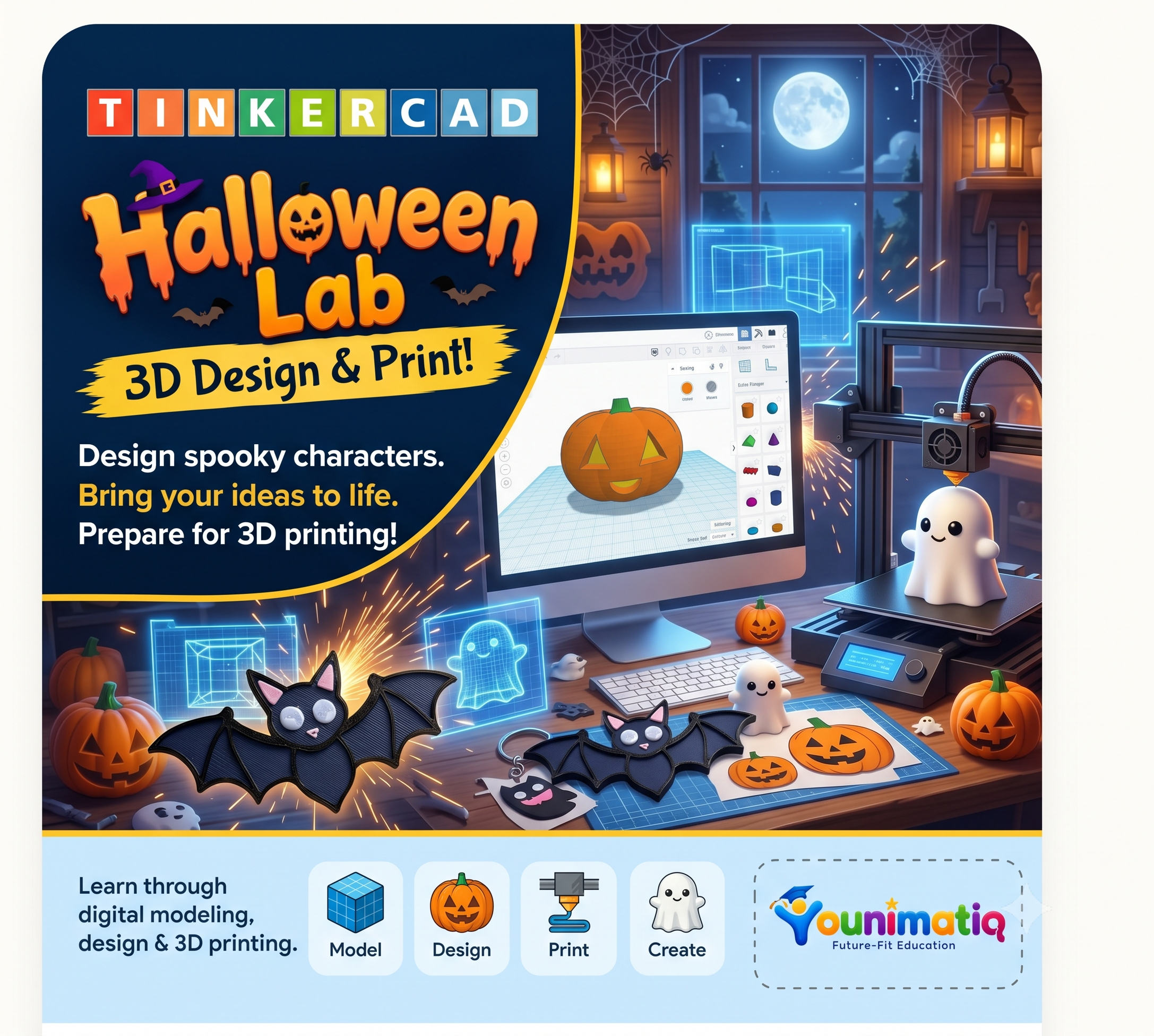
Tinkercad Halloween 3D Design & Print Lab
Children become Halloween product designers. They use Autodesk Tinkercad to create original 3D models, combine basic shapes, learn beginner CAD skills, and prepare selected designs for 3D printing.The course follows one design journey: Imagine → Model → Customise → Test → Print → Showcase.
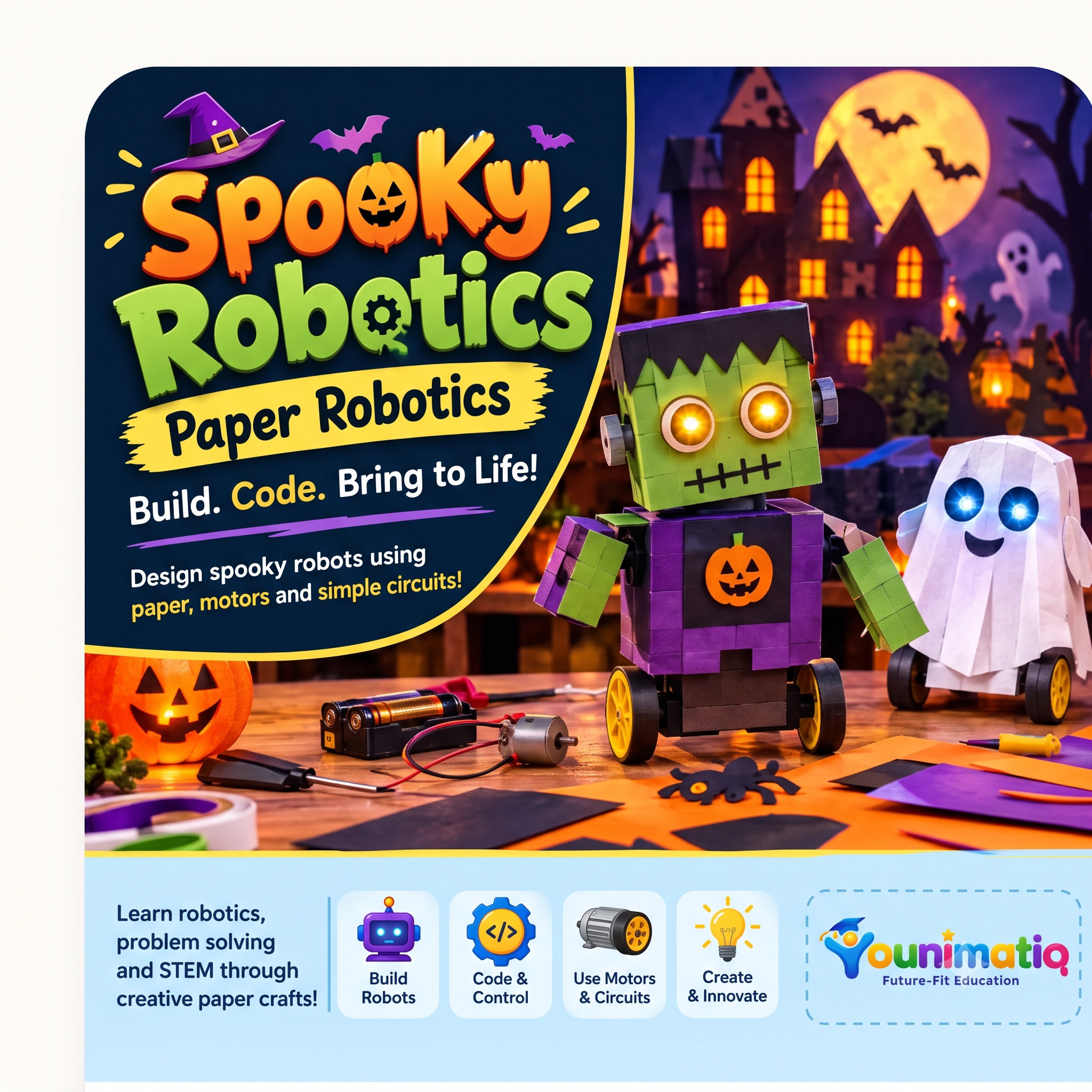
Spooky Robotics: Build, Create & Animate!
Spooky Circuits introduces students to electronics through Halloween-themed paper crafts. Students learn how circuits work by building glowing pumpkins, haunted houses, interactive greeting cards, and other spooky creations using LEDs, conductive tape, batteries, and switches. Each project combines creativity with practical STEM learning, helping students develop circuit-building, troubleshooting, design, and problem-solving skills.
